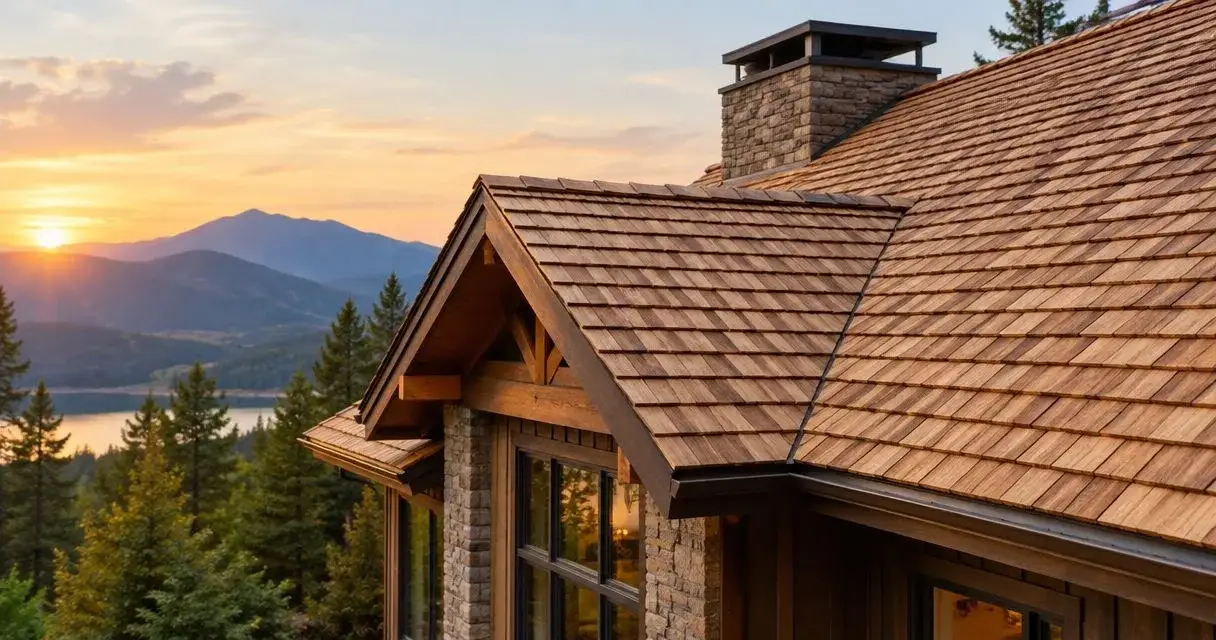
Best overall: Class A synthetic shake. Best for budget-minded homeowners: Class A architectural shingles with a shake-look profile. Best for purists: fire-retardant-treated cedar shake, with caveats. Real cedar shake is the weakest fire performer of the three, and in fire-prone areas the roof is the first place embers land.
TL;DR
- For best cedar shake roofing fire resistant performance, choose Class A synthetic shake such as Brava or DaVinci.
- Class A architectural shingles give a shake-look at lower complexity and are a solid second pick.
- Untreated cedar shake carries no fire rating. Treated cedar usually tops out at Class B unless the full assembly qualifies.
- Confirm the manufacturer’s published fire rating and the assembly it requires before you buy.
Why this matters
Fire ratings for roofing come from the ASTM E108 test and sort roofs into three classes: A, B and C. Class A is the highest, meaning the roof covering resists severe fire exposure from outside. Untreated wood shake is not in that system at all. It burns, and flying embers are the usual way a roof catches.
In Montana you also deal with heavy snow, freeze-thaw cycles, wind, hail and strong high-altitude UV. A shake roof that looks great on day one still has to survive all of that. This guide ranks the options that give you the shake look and a better fire profile. Rankings reflect fire performance first, then durability and upkeep.
What makes the best fire-resistant shake roof
Use these criteria to audit the ranking below before you read the table.
- Fire classification of the whole assembly. The rating applies to the roof covering plus the underlayment and deck it was tested with, not to the shingle alone.
- Ember resistance. Gaps, curled edges and cracked pieces give embers a place to lodge.
- Weather durability. Snow load, ice dams, hail and UV all shorten the life of a roof that is only fire-rated on paper.
- Maintenance burden. Moss, debris in valleys and needle buildup are a fire and moisture problem on any roof.
- Look. Shake texture and color depth matter to many homeowners, and it is a fair reason to choose.
- Local code and insurer requirements. Some wildland-urban areas require a minimum roof class. Check yours before you pick.
Fire-resistant shake roofing at a glance
| Option | Best for | Standout feature | Key limitation |
|---|---|---|---|
| Class A synthetic shake (Brava, DaVinci) | Homeowners who want the cedar look with top fire class | Shake texture without wood fuel | Confirm the exact rated assembly |
| Class A architectural shingles (Owens Corning, GAF, Malarkey) | Practical, durable roof with a layered look | Proven asphalt performance in Montana weather | Less dimensional than true shake |
| Fire-retardant-treated cedar shake | Purists who want real wood | Authentic grain and aging | Usually Class B, needs upkeep, treatment can fade |
1. Class A synthetic shake: best cedar-look roof for fire-prone areas
Synthetic shake is made from engineered materials molded and colored to look like split cedar. Brava and DaVinci are two lines Ace Roofing installs. The appeal is simple: you get the shadow lines and texture of shake without a wood product on the roof.
Synthetic shake pros:
- Class A fire rating is available on published product assemblies, which is the highest ASTM E108 class.
- Does not rot, split or absorb moisture the way wood does.
- Holds up to freeze-thaw cycles without cupping or curling.
- Wide color range, including weathered-gray looks that real cedar takes years to reach.
Synthetic shake cons:
- The Class A rating depends on the installation assembly the manufacturer specifies. Skipping a required underlayment voids the rating.
- It is a specialty install, so roofer experience matters more than on asphalt.
- Upfront cost drivers are higher than asphalt. Use the online instant roof quote route through our team for a real number rather than guessing.
Synthetic shake lifespan: Use the manufacturer’s published figures and conditions, not a general promise.
Best for: a home in a wildland-urban area where you want the cedar look and the top fire class.
Verdict: Buy.
2. Class A architectural shingles: best budget-friendly shake-look roof
Architectural asphalt shingles are layered, with a dimensional profile that reads as textured from the street. Owens Corning, GAF and Malarkey all make lines that carry a Class A rating when installed per the manufacturer’s instructions. Ace Roofing holds GAF Master Elite, Owens Corning Platinum Preferred Contractor and Malarkey Emerald Premium Contractor status.
Architectural shingle pros:
- Class A ratings are common across major architectural lines.
- Installers know the system well, and repairs are simple.
- InterNACHI’s general benchmark is about 30 years for architectural shingles, versus about 20 for 3-tab. It is a benchmark, not a promise.
- Handles Montana snow load and wind with proper ventilation and ice-and-water protection.
Architectural shingle cons:
- It looks like a good shingle, not a split-cedar roof. Shadow depth is shallower.
- Hail can bruise any asphalt shingle, so impact-resistant options deserve a look.
- Fewer color options in true weathered-wood tones.
Best for: homeowners who want a fire-rated roof that stays practical and easier to maintain.
Verdict: Buy if you value performance over the shake texture.
3. Fire-retardant-treated cedar shake: best for real-wood purists
Treated cedar is real wood that has been pressure-impregnated with fire retardant. It is the only option on this list that still gives you actual cedar grain. It is also the weakest on fire.
Treated cedar pros:
- Authentic look, texture and aging that no imitation matches.
- Treated shake can earn a fire classification, typically Class B on its own.
- Natural material with a long tradition in mountain homes.
Treated cedar cons:
- Class B is the common ceiling. Reaching Class A generally requires a qualifying assembly with a fire-resistant underlayment, per the product’s published testing.
- Treatment can leach over time in wet and snowy climates, which is a real concern with Montana freeze-thaw cycles and ice dams.
- Needs regular cleaning of moss, needles and debris, and wood splits and cups with age.
- Some codes and insurers restrict wood roofs in higher-risk zones.
Best for: a historic or design-driven project where real cedar is non-negotiable and local code allows it.
Verdict: Hold. Choose it only after you confirm code, rating and maintenance commitment.
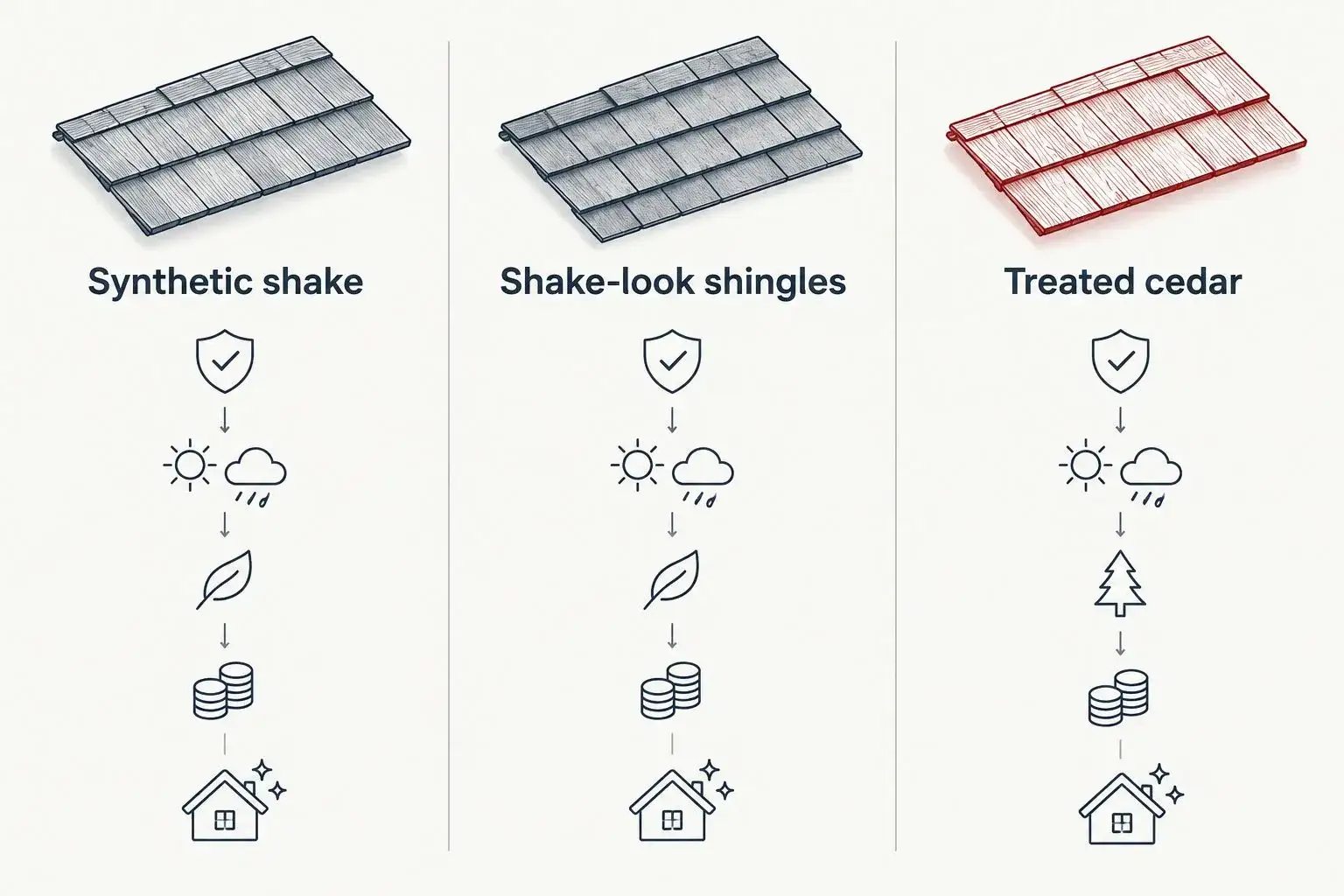
Fire class and upkeep drive the ranking, not the look alone.
How we ranked
Fire class came first, because it is the reason you are reading this. Weather durability came second, since a Montana roof lives with snow load, ice dams and UV. Maintenance and look broke ties. Untreated cedar shake is excluded: it carries no fire class.
What to check before you commit
- Ask for the rated assembly in writing. The class belongs to the shingle plus underlayment plus deck, not the shingle alone.
- Look at the edges and the valleys. Embers collect where debris does. Metal flashing and clean valleys help any roof.
- Think about the roof edge. Gutters full of needles and leaves are a fire path. Ace Roofing installs 5-inch and 6-inch K-style gutters and the team can speak to keeping them clear.
- Plan ventilation and ice protection. A fire-rated roof still fails if ice dams push water under it.
Book a free roof inspection
Get a straight answer on which fire-rated roof fits your home.
Which fire-resistant shake roof should you choose?
If fire is your top concern and you want the cedar look, choose Class A synthetic shake. If you want a durable, simpler roof and care less about texture, choose Class A architectural shingles. Pick treated cedar only if real wood matters more to you than the highest fire class, and only after you confirm local requirements.
Ace Roofing has worked on Montana roofs since January 2004, with more than 3,000 projects completed and a 4.9 average star rating. Our team is licensed and insured, and a free inspection is the fastest way to find out what your roof deck and local conditions call for. Learn more about the company on the about page.
FAQ
What is the best cedar shake roofing that is fire resistant?
Class A synthetic shake is the best fire-resistant cedar-look roof. It gives you the shake texture with the highest ASTM E108 fire class when installed per the manufacturer’s assembly.
Is cedar shake roofing fire resistant?
Untreated cedar shake is not fire resistant and carries no fire class. Fire-retardant-treated shake can earn a rating, usually Class B.
Can a cedar shake roof be Class A?
Treated cedar can reach Class A only as part of a tested assembly that includes a qualifying underlayment. Check the product’s published testing before you assume it.
What do Class A, B and C mean for roofs?
They are ASTM E108 fire-test classes. Class A resists severe fire exposure, Class B moderate, and Class C light.
Does synthetic shake look like real cedar?
Yes, close up and from the street. Brava and DaVinci are molded and colored to mimic split cedar, including weathered tones.
Do architectural shingles count as fire resistant?
Many carry a Class A rating when installed per the manufacturer’s instructions. Confirm the specific product and assembly.
How long do shingle roofs last in Montana?
InterNACHI’s general benchmarks are about 20 years for 3-tab and about 30 for architectural shingles. Snow, ice dams and UV can shorten that, and it is not a guarantee.
How do I know which roof my home needs?
Start with a free roof inspection. Our team checks the deck, ventilation and local requirements before recommending a material.
One last thing
A Class A shingle on a roof with clogged gutters and needle-filled valleys is still a fire risk. The cleanest roof, kept clear of debris every season, outperforms a better-rated roof that nobody maintains. Ace Roofing offers inspections and maintenance so small problems get caught before they matter.