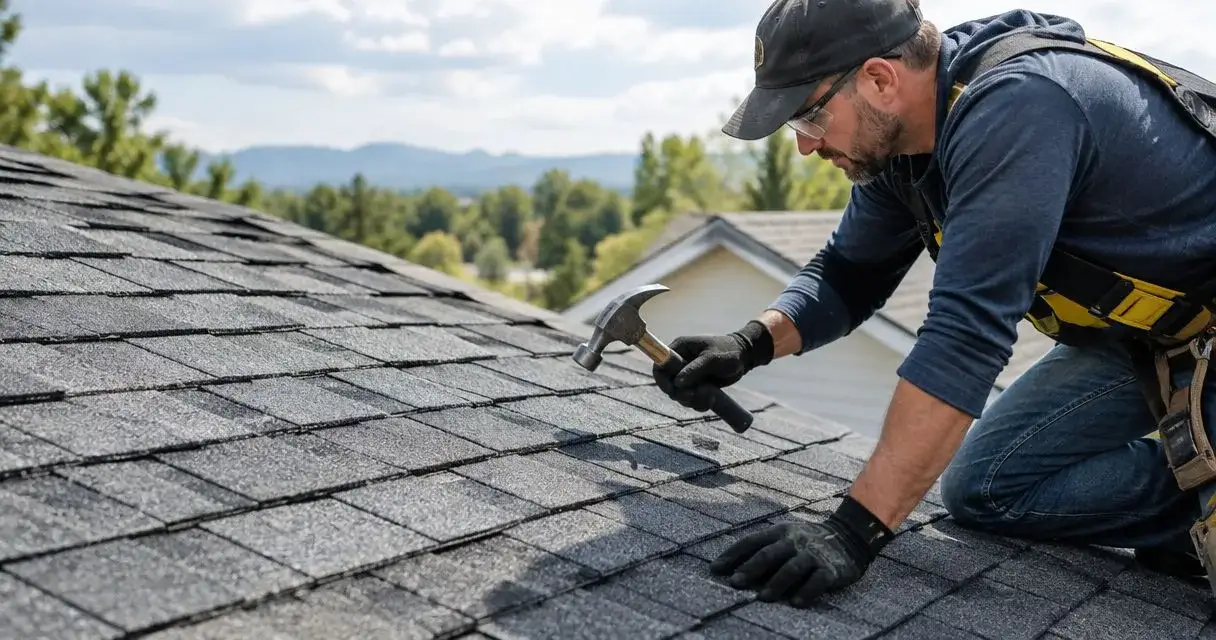
Best overall: Owens Corning Duration STORM. Best for a standard architectural look: GAF Timberline AS II. Best for cold-weather flexibility: Malarkey Legacy. Best for a slate look: DaVinci. Best for a cedar shake look: Brava. Every pick below is built to carry a Class 4 impact rating, the top tier under UL 2218.
TL;DR
- Owens Corning Duration STORM is the best overall impact resistant shingle for hail on a Montana asphalt roof.
- Class 4 under UL 2218 is the rating to demand: a 2-inch steel ball dropped from 20 feet without cracking.
- Synthetic slate and shake from DaVinci and Brava cover the look-driven buyer who wants Class 4 without asphalt.
- Rating applies to the specific product line, not the brand. Confirm the exact shingle name before you sign.
Why this matters
Hail does not need to be big to hurt a roof. The National Weather Service classes hail as severe at 1 inch in diameter, and a Montana summer storm can bring that with little warning. Hail bruises the shingle mat, knocks granules loose and shortens the life of a roof that looks fine from the driveway.
A standard architectural shingle lasts about 30 years under InterNACHI’s general benchmark, and a 3-tab about 20. Those are benchmarks, not promises, and repeated hail takes years off them. An impact resistant shingle is the cheapest way to keep a roof on schedule when storms keep coming.
Ace Roofing has roofed Montana homes since 2004, and the questions that come up most after a storm are about which shingle would have held up. This guide answers that.
What makes the best impact resistant shingle for hail
Use these criteria to audit the ranking before you read it:
- Class 4 rating under UL 2218. The test drops a steel ball of 2 inches from 20 feet. Class 1 uses a 1.25-inch ball, Class 2 uses 1.5 inches, and Class 3 uses 1.75 inches. Only Class 4 is worth paying extra for in hail country.
- Rating on the exact product line. Manufacturers sell impact resistant and standard shingles under the same brand. The rating belongs to the product, not the company.
- Cold-weather behavior. Montana roofs swing through freeze-thaw cycles. A shingle that stays flexible in cold is less likely to crack on impact or at the seams.
- Wind and UV performance. Hail is one threat among several. High-altitude sun and wind load still decide how the roof ages.
- Installer certification. Manufacturer certification affects how the system is installed and what the manufacturer will stand behind.
- Look and fit with the house. A roof you dislike is a roof you replace early.
The picks at a glance
| Product | Best for | Standout feature | Key limitation |
|---|---|---|---|
| Owens Corning Duration STORM | Best overall | SBS-modified asphalt, Class 4 | Asphalt look only |
| GAF Timberline AS II | Standard architectural look | Class 4 in a familiar profile | Confirm the AS II line, not standard Timberline |
| Malarkey Legacy | Cold-weather flexibility | Polymer-modified asphalt | Fewer color options than the largest brands |
| DaVinci synthetic slate | Slate look without slate weight | Class 4 polymer product | Premium material, different install |
| Brava synthetic shake | Cedar shake look | Class 4 polymer product | Premium material, different install |
1. Owens Corning Duration STORM: best impact resistant shingle for hail overall
Duration STORM is Owens Corning’s Class 4 architectural line, made with SBS-modified asphalt that flexes on impact instead of cracking. It is the default pick for a Montana home that wants hail protection and a normal shingle look.
Duration STORM pros:
- Class 4 impact rating under UL 2218
- SBS modification helps the mat stay flexible in cold
- Architectural profile that suits most homes
- Ace Roofing is an Owens Corning Platinum Preferred Contractor, so this system is a regular installation for our team
Duration STORM cons:
- It costs more than a standard architectural shingle
- It cannot match the dimensional depth of slate or shake
Duration STORM pricing: not listed here. Get a current number from the free quote and inspection request.
Best for: most single-family homes in hail-prone areas. Verdict: Buy.
2. GAF Timberline AS II: best impact resistant shingle for a standard architectural look
GAF’s Class 4 option is the Timberline AS II line. It looks like the architectural shingle your neighbors already have, with the hail rating added. The detail that trips buyers up is that standard Timberline lines are not Class 4. Name the AS II line in your contract.
Timberline AS II pros:
- Class 4 impact rating
- Familiar profile that blends with existing neighborhoods
- Wide color range
- Ace Roofing is GAF Master Elite certified
Timberline AS II cons:
- Easy to confuse with non-rated Timberline lines on a quote
- Asphalt only, so no shake or slate texture
Best for: homeowners who want the standard look with hail protection. Verdict: Buy.
3. Malarkey Legacy: best impact resistant shingle for cold-weather flexibility
Malarkey makes polymer-modified asphalt shingles designed to stay flexible as temperatures drop. That matters on Montana roofs that cycle through freezing nights and sun-warmed days. Malarkey describes its Legacy line as impact resistant; check the current Class 4 listing for the specific product and color you choose.
Malarkey Legacy pros:
- Polymer-modified asphalt aimed at tougher weather
- Heavier, dimensional architectural shingle
- Ace Roofing is a Malarkey Emerald Premium Contractor
Malarkey Legacy cons:
- Fewer retail shelf options than the largest brands, so lead times can vary
- Confirm the Class 4 rating on the exact line before ordering
Best for: exposed sites with big temperature swings. Verdict: Buy after confirming the rating.
4. DaVinci synthetic slate: best impact resistant roofing for a slate look
DaVinci makes polymer roofing shaped like slate and shake. It is a different material from asphalt, and DaVinci publishes Class 4 ratings for its products. You get the look of slate without the weight of natural stone, and synthetic tiles do not dent or split the way hail-struck wood can.
DaVinci pros:
- Class 4 rated polymer product
- Convincing slate appearance
- Long-lived material with a manufacturer-stated lifespan; read it and its conditions before you buy
DaVinci cons:
- Premium material and a different installation process than asphalt
- Overkill if you only want hail protection and a plain look
Best for: high-end homes where the roof is a design feature. Verdict: Hold unless the look is the point.
5. Brava synthetic shake: best impact resistant roofing for a cedar shake look
Brava makes polymer roofing in cedar shake, slate and tile profiles. The shake profile gives you the rustic mountain look common on Montana lodges and cabins without the fire and rot concerns of real wood. Confirm that the exact profile and color you pick carries the Class 4 listing.
Brava pros:
- Cedar shake appearance without wood upkeep
- Impact resistant polymer material
- Fits mountain and lodge-style homes
Brava cons:
- Premium material and specialized install
- Costs more than any asphalt option on this list
Best for: cabins and lodge-style homes. Verdict: Hold unless you want the shake look.
How these were ranked
The ranking follows the criteria above: Class 4 rating first, cold-weather behavior second, and fit with a typical Montana home third. Asphalt options rank higher because they cover more homes at a lower material cost than synthetic products. Each item owns a different use case, so the list works as a decision tree rather than a leaderboard.
Which impact resistant shingle should you choose?
- Default for most homes: Owens Corning Duration STORM.
- Want the standard look: GAF Timberline AS II.
- Cold, exposed site: Malarkey Legacy.
- Design-driven slate or shake look: DaVinci or Brava.
If you are still undecided, pick the Class 4 asphalt shingle your installer is certified on. Installation quality decides how the roof performs, and manufacturer-certified crews install to that manufacturer’s spec. Ace Roofing is licensed and insured and has completed more than 3,000 projects; you can read more about our team.
Get a free roof inspection
Have our team check your roof and talk through Class 4 options.
FAQ
What is the best impact resistant shingle for hail?
Owens Corning Duration STORM is the best overall pick for most homes. It carries a Class 4 rating and uses SBS-modified asphalt that flexes on impact.
What does a Class 4 shingle rating mean?
Class 4 is the highest rating under UL 2218. The shingle must survive a 2-inch steel ball dropped from 20 feet without cracking. It is a lab test, not a guarantee against every hailstorm.
Are impact resistant shingles hailproof?
No. They resist damage better than standard shingles, but large hail or repeated storms can still harm any roof. Inspect after every severe storm.
Are all GAF or Owens Corning shingles Class 4?
No. Only specific product lines carry the rating. Name the exact line, such as Duration STORM or Timberline AS II, in your contract.
Is a synthetic roof better than asphalt for hail?
Not necessarily. Class 4 asphalt and Class 4 synthetic both pass the same test. Synthetic mainly wins on appearance, with a slate or shake look.
Do impact resistant shingles lower insurance costs?
Some insurers offer discounts, but it varies by company and policy. Ask your insurer directly before you decide.
How long do architectural shingles last?
InterNACHI’s general benchmark is about 30 years for architectural shingles and about 20 for 3-tab. Manufacturer lifespans vary and hail damage shortens them.
Should I get a roof inspection after hail?
Yes. Damage often cannot be seen from the ground. Ace Roofing offers free roof inspections and can help with insurance claim assistance.
One last thing
The best shingle on this list does nothing if the contract says only Timberline or only Duration. Write the full product name and its Class 4 rating into the contract and keep the manufacturer’s rating documentation with your roof records. If you ever file a hail claim, that paperwork is the first thing you will want.
For an inspection and a recommendation on your roof, use the contact page and our team will follow up.